How A Hotel Owner’s Encounter with Owls Changed His Life
Ferruginous Pygmy Owls (Glaucidium brasilianum) are pint-sized raptors with endearing yet piercing faces. In Costa Rica, they are common throughout the North Pacific part of the country. Once I learned their song, I started to notice their presence throughout the tropical dry forest, and in my work as a guide they are a bird I am always eager to show to guests. Their tiny exuberance never fails to enamor even the most bird-skeptical traveler.
This year the Raptor Research Foundation conference is being held in San José, Costa Rica, partially hosted by brothers Emmanuel and Josue Guzmán. They own Hotel Robledal with their brother Lorenzo, a charming gem located near the international airport with views of the Talamanca range, an essential pathway for migrating raptors during the spring and fall. At first glance their hotel appears normal. I stayed there this past spring, seeking lodging that was in the city, but that prioritized plants over plasma TVs. Hotel Robledal, however, takes botanical love to a new level. Green is the featured color everywhere you walk on the property, and you can reliably hear Ferruginous Pygmy Owls singing throughout the day from one of the many trees the brothers lovingly care for. The presence of these owls is what inspired Emmanuel to design such ecologically rich hotel grounds, a decision that led to a thriving habitat amidst a labyrinth of development. Now, the industrial park next door is joining him in efforts to create a contiguous owl-friendly landscape, otherwise known as an interurban biological corridor.

Emmanuel first noticed the owls in 2010. “They were nesting in a metal tube of an old garage instead of inside a tree,” he explains. Over 60 species of birds rely on cavities for nests in Costa Rica. Suitable, safe breeding sites are a hot commodity given the density of species sharing space in the tropics, especially in developed areas like Alajuela province where the hotel resides. Emmanuel had recently sold his transportation company and pivoted to becoming certified as a naturalist at the National Institute of Biodiversity. To him, the discovery of the owls felt like a well-timed invitation to lean into his passion for the natural world: “This was a special encounter. In my moment of personal uncertainty, the experience marked the beginning of a strong bond with the owls that continues to this day.” He decided to build two nest boxes and add a camera to one of them. The owls moved in immediately.
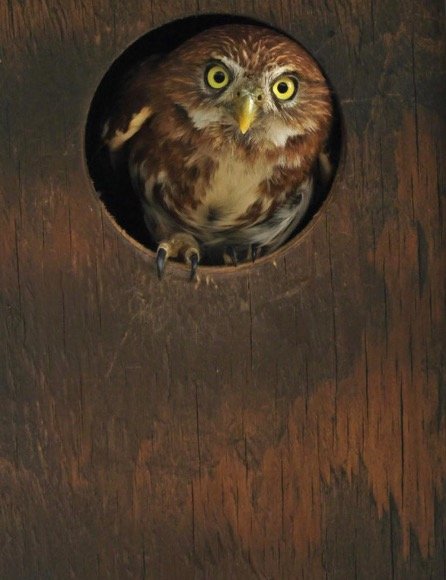
The property now hosts three nest boxes. Between 2011 and 2023, 41 owlets successfully fledged from the nest boxes and joined the local population. Once he started observing the owls, Emmanuel couldn’t stop. “When you want to truly understand a bird, you need to study everything, including its distribution and natural history, and through that journey, you understand more about how you can help your community and your country,” he says. The presence of the owls became a catalyst for what has evolved into Funda-Buho, an organization “dedicated to promoting the well-being of owl species in developing urban areas.”
Once an owl presence was established on the hotel property, Emmanuel’s next step was to talk to his next-door neighbors: administrators of an industrial park covering several square kilometers of land and including approximately thirty-five companies. Most of them specialize in manufacturing medical devices, although agribusiness, food distribution, and machinery production are represented in the park as well. Emmanuel initiated partnerships by inviting administrators to have lunch at the hotel and taking them on garden walks to see the owls. From there, conversations led to the importance of connective habitat and the potential for the park to coordinate design decisions. Now, several neighboring companies have implemented features in the spirit of this goal, including establishing pollinator gardens and planting specific tree species that attract owl prey.
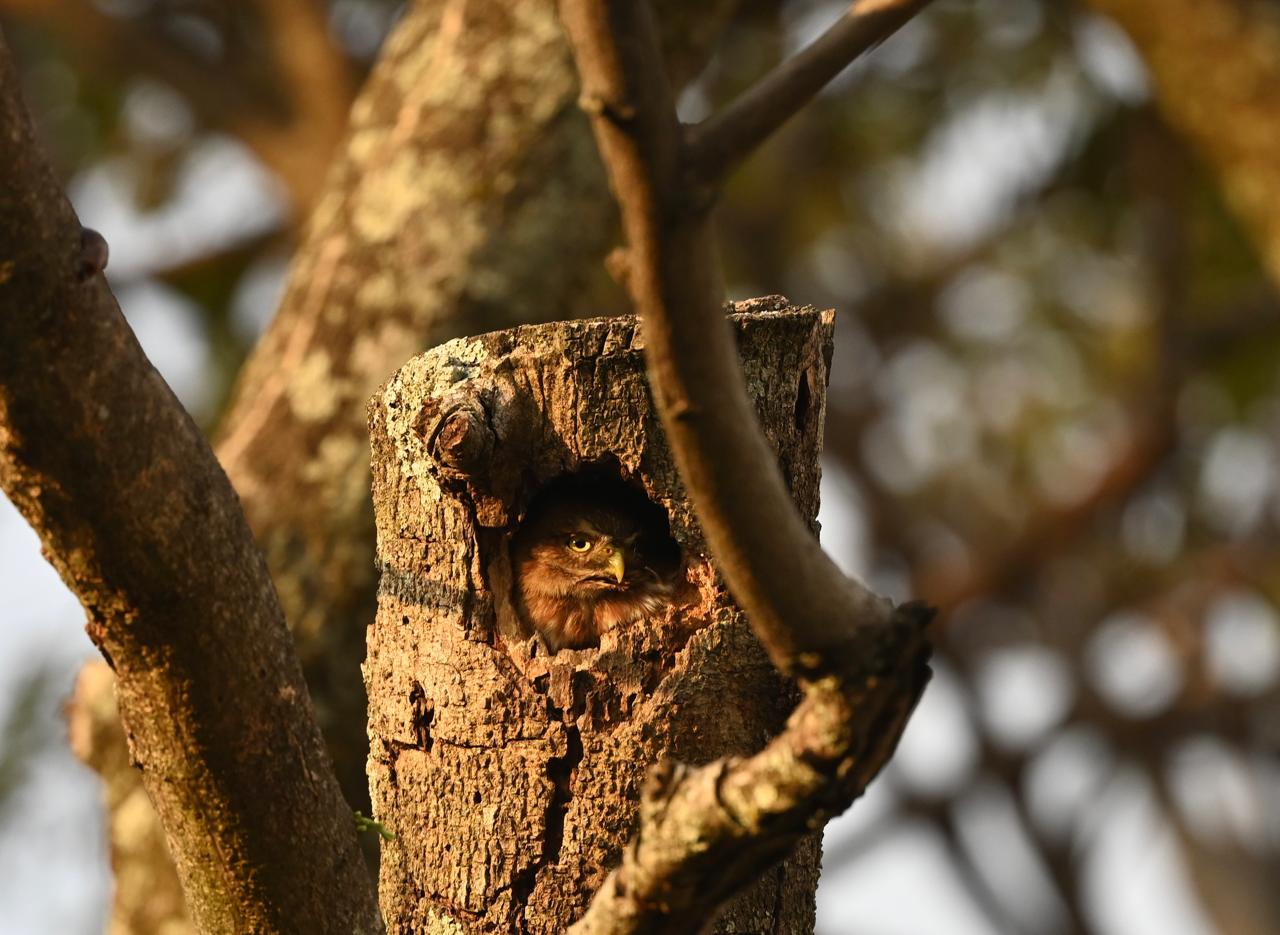
The project, which arose from one man’s curiosity, has filled in a gap of knowledge on Ferruginous Pygmy Owls nesting in Costa Rica’s urban-adjacent dry forests. There is not much known about the life history of these tiny raptors in this region. Over the course of 12 years Emmanuel logged breeding parameters for the population nesting on the hotel grounds, including the longevity of the owls’ breeding season (four months) and the duration of prey delivery to their young (eight weeks). He also uncovered a predictable prey calendar for the owls. Pairs focus their hunting efforts on specific species depending on the time of year. May, for example, is “Beetle Month,” because the nuptial flights of a particular scarab beetle in the genus Phyllophaga, Abejónes de Mayo, peak during that month. The adult owls take advantage of this, delivering one beetle after another to their rapidly growing owlet offspring inside the nest boxes. From camera footage, Emmanuel’s team also discovered that the owls feed on fruit bats and have a predilection for two species of gecko. His response to this discovery? To build a “gecko garden” and plant vegetation that attracts bats, including the fascinating tent-making bats that modify leaves for roosting shelters. As a result of these owl-inspired designs, more and more wildlife species are moving in. The result is a salient reminder that even in urban areas, oases are entirely possible.
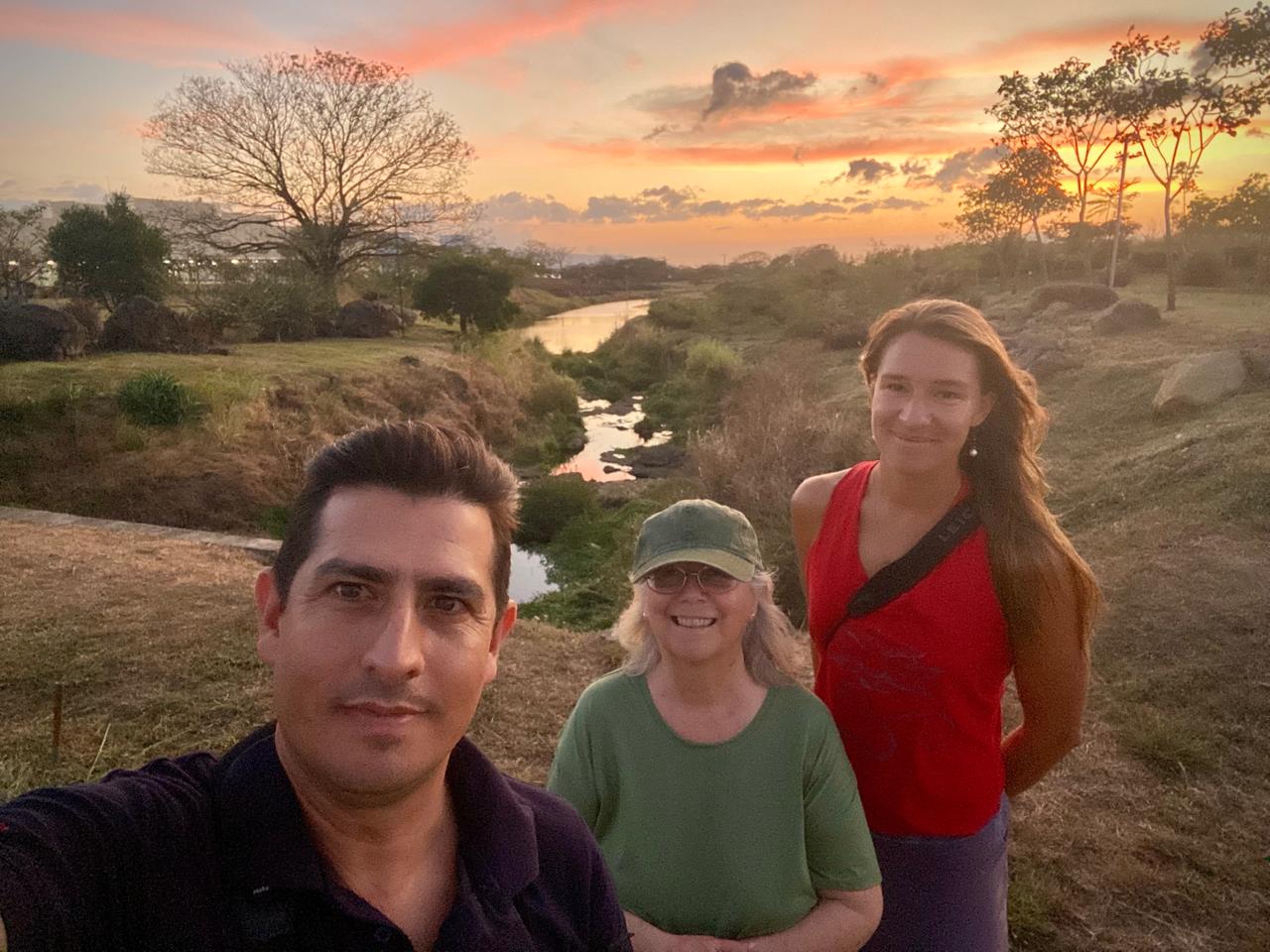
After working a winter season on a ship off the coast of Costa Rica, I spent my last night in the country with Emmanuel and another hotel guest, walking through the industrial park looking for birds. Shimmering sunset light fell on a series of stepped pools. Green Herons stalked fish. Northern Jacanas and Southern Lapwings fed side by side with Least and Spotted Sandpipers. Grackles mobbed an Osprey above our heads. Whistling ducks and Spot-breasted Bobwhites waddled along the perimeter of a lawn fringed with gorgeous flowers and inviting benches. A Black Vulture pair nested in a tree cavity near a gray building, my first sighting of vultures raising chicks in a natural hole. Emmanuel pointed to a Gray Hawk nesting in a Great Kapok tree, the tree of my favorite childhood book, a tree that stands as a symbol for the resilience and magnitude of biodiversity in the tropical rainforest. It was the last thing you’d expect in a pulsing industrial zone. The evening provided a sobering reminder that, as Emmanuel knows well, a little bit of habitat can go a long way.
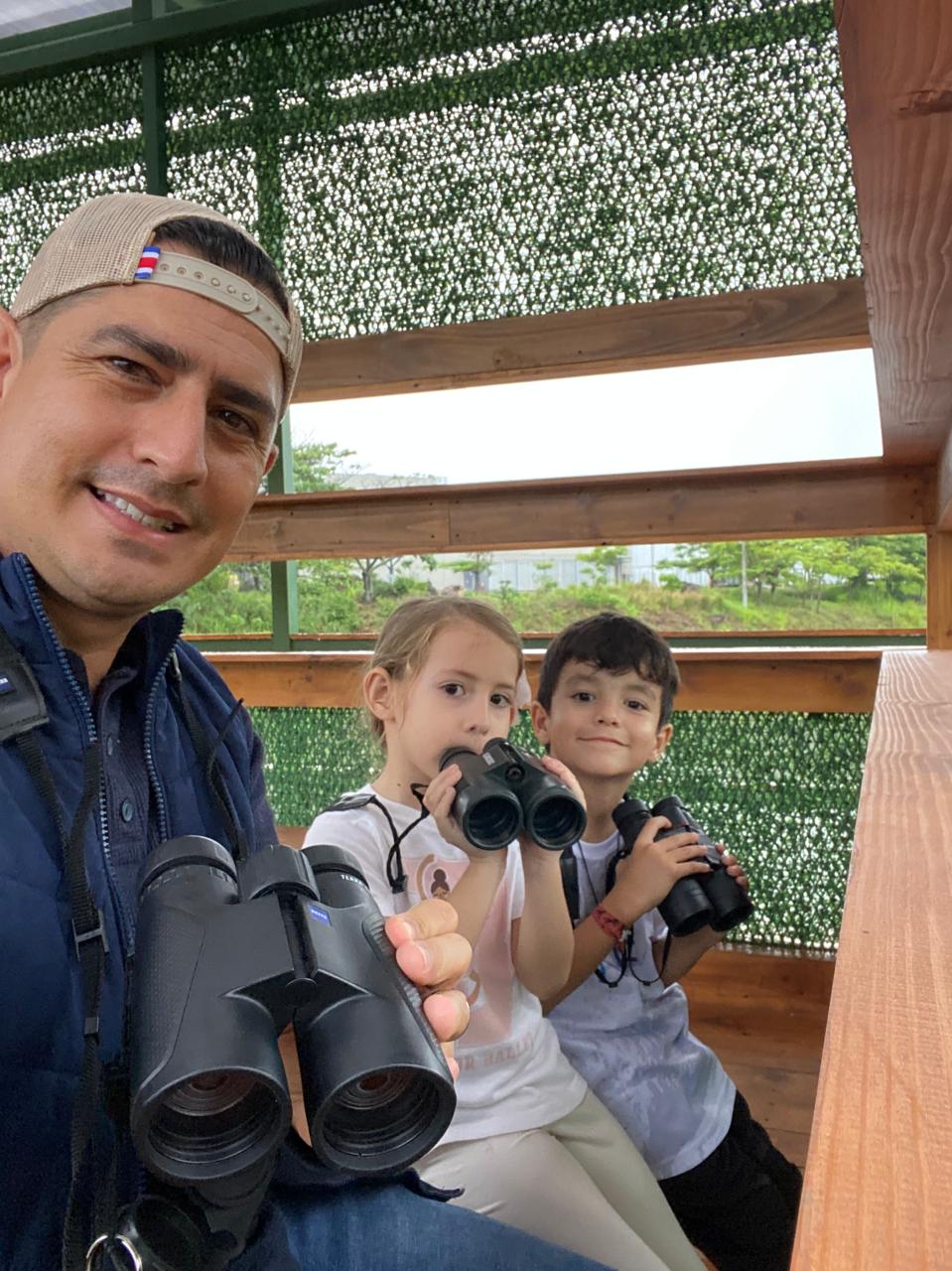
Emmanuel envisions Funda-Buho as a platform for community enrichment. He hopes to see more opportunities for children in urban parts of Costa Rica to pursue jobs in the environmental field. This, he says, is a far better option than the temptation of drug trafficking and other trajectories that often pull youth into a life of crime in the country’s urban centers. “This project has allowed my family to connect with a new market that is aware of responsible tourism practices and has offered a safe work environment,” says Emmanuel. “At Funda-Buho, we concentrate on young people with the hope of ensuring that our action plans will help our community while simultaneously complimenting the creation of interurban biological corridors here in Costa Rica.”
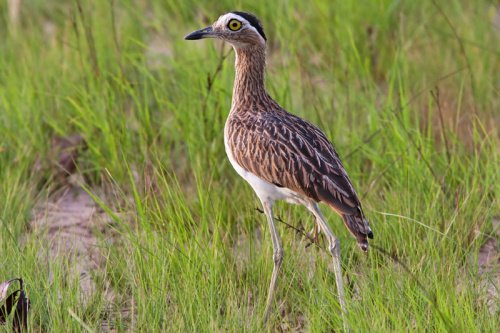
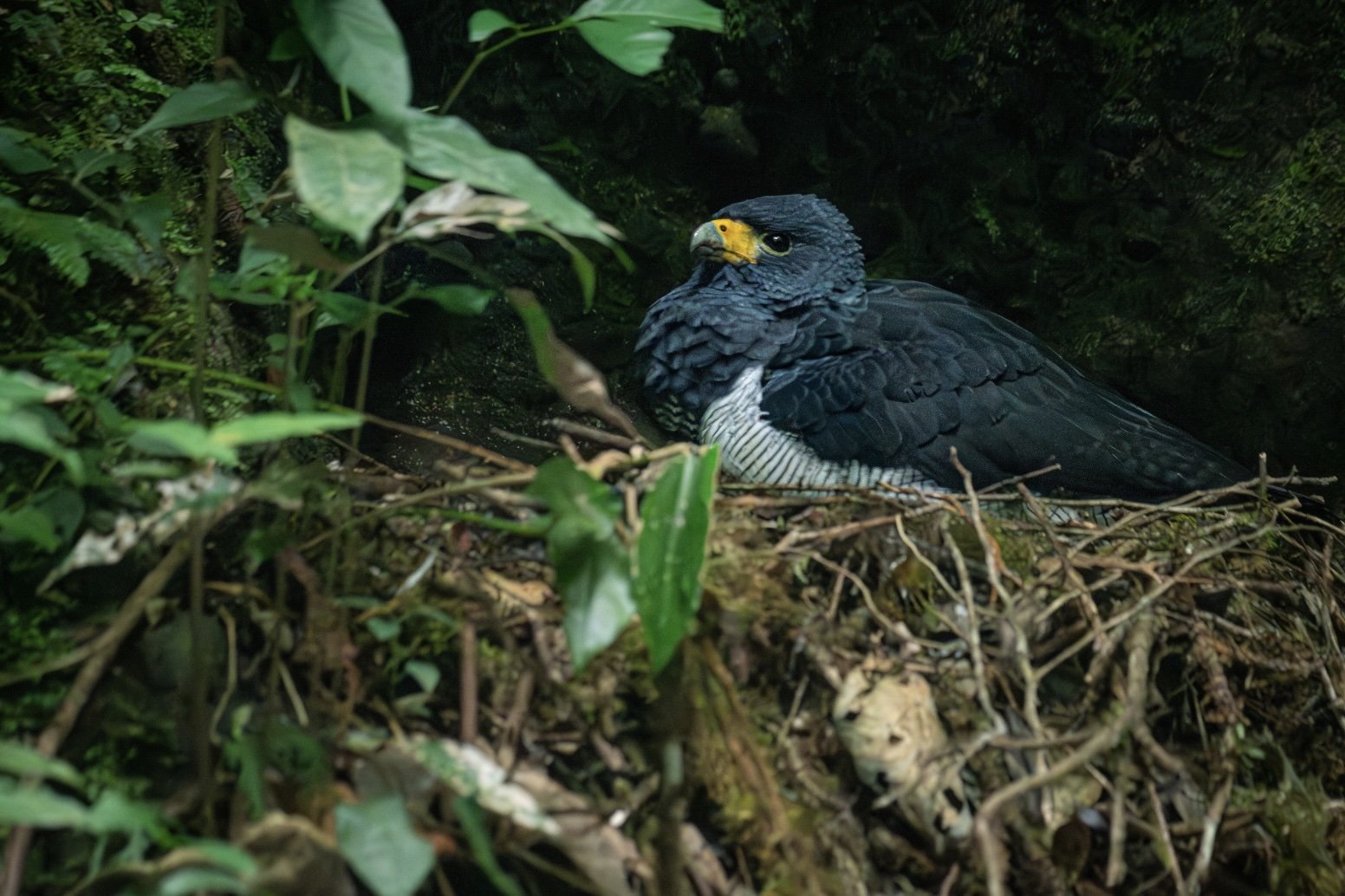
If you are attending this year’s RRF conference, I encourage you to visit Hotel Robledal. It’s a twenty-minute drive traffic-depending, and the Guzmán brothers would love to meet you. From the hotel grounds you will likely encounter the owls, and non-raptors as well, including Spot-breasted Orioles (Icterus pectoralis), Yellow-naped Parrots (Amazona auropalliata), Double-striped Thick-knees (Hesperoburhinus bistriatus), and Barred Hawks (Hesperoburhinus bistriatus).
Emmanuel has many thanks he would like to give to those who have supported the establishment of Funda-Buho — to the Costa Rican government institutions that have supported the project, the companies in the industrial park that have decided to participate, his hotel clients, bird guide friends, and to the Raptor Research Foundation family. He would especially like to extend thanks to Rick Hannes, who introduced him to RRF.